
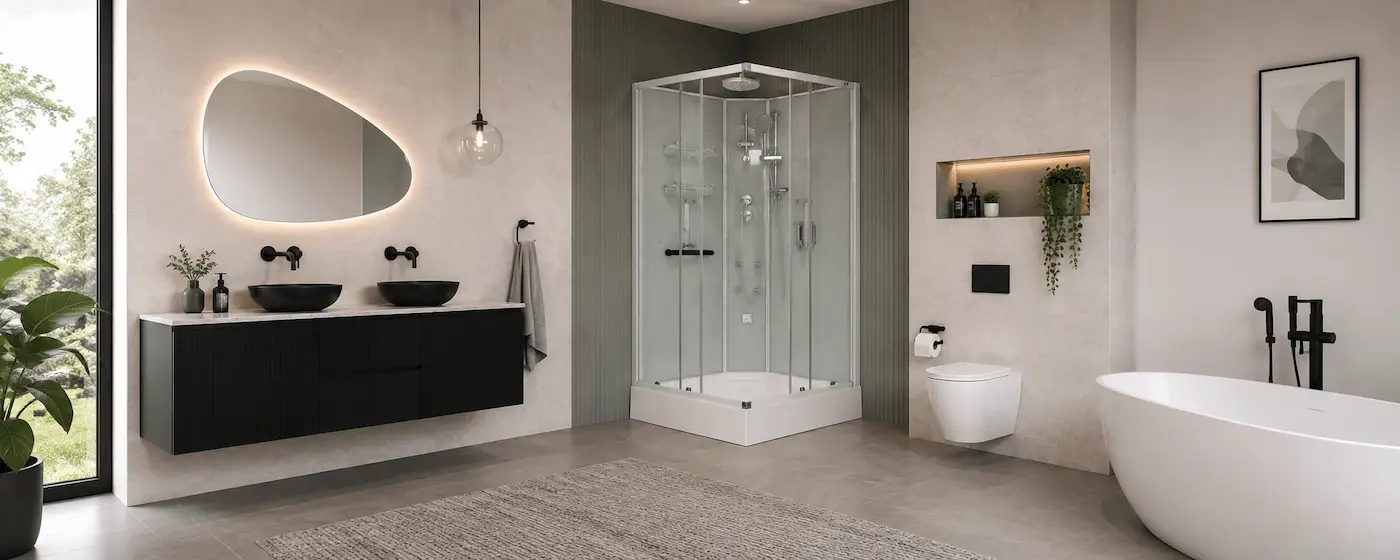

Are Shower Pods Better Than Tiles for an Australian Bathroom?

Shower Pods vs Tiles: Which One Is Better?
Shower pods vs tiles is a choice between a complete enclosed shower system and a wet area constructed from separate waterproofing, wall-finishing, screen and plumbing components. Both options can produce an effective bathroom, but they differ substantially in installation time, cost certainty, maintenance, design freedom and the amount of building work required.
An Aeros shower cubicle combines a reinforced tray, rear wall panels, safety glass, frame and shower fittings in one coordinated product. A tiled shower is built on site using prepared substrates, a compliant waterproofing system, tiles, grout, sealants, a screen and separately selected fittings. The better choice depends on the room, the user and the project priorities.
What is a shower pod?
In a shower pods vs tiles comparison, a shower pod—also called a fully enclosed shower cubicle— is designed as a complete showering system. The tray, wall panels, frame, glass and shower components are selected to work together. The enclosure contains shower water within its own structure rather than relying on newly tiled room walls to form the wet area.
Aeros designs and develops square front-entry, square corner-entry, round corner-entry and rectangular front-entry cubicles for different room layouts and customer applications. Basic models focus on practical showering, while deluxe models include additional features such as a waterfall spout, body jets, dispensers, baskets, a multi-function hand shower and an internal grab bar.
In the shower pods vs tiles decision, the pod’s main advantage is coordination. Buyers are not separately specifying a base, wall finish, screen, shower fittings and enclosure junctions. The selected model establishes the dimensions, door arrangement, included components and installation sequence before work begins.
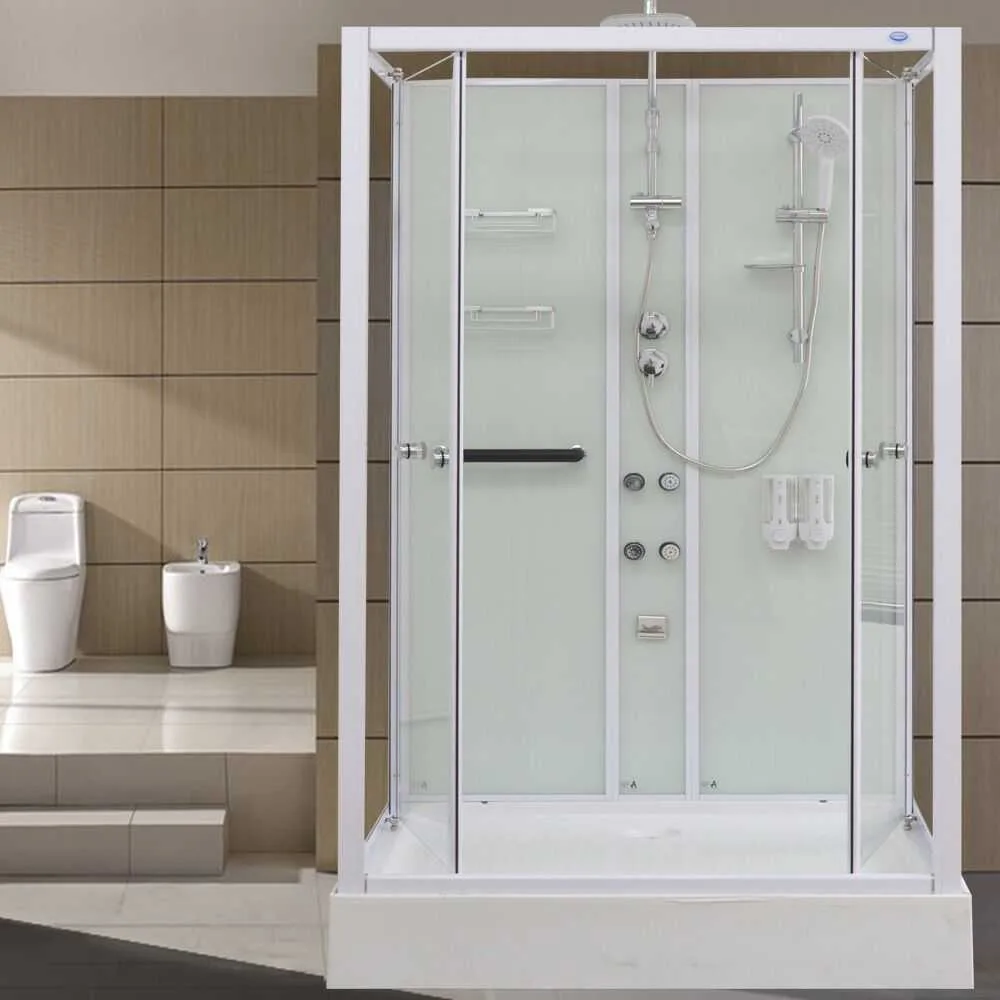
How an Aeros cubicle contains water
The reinforced acrylic tray carries the enclosure and provides a defined base. Rear wall panels and safety glass direct water into the tray. The custom clip-lock assembly method does not require screws, glue or silicone to assemble the enclosure, and silicone is not required around the tray perimeter.
Correct levelling, component alignment, water connections, waste installation and testing remain essential. A complete system simplifies the work, but it still has to be installed according to the model instructions and applicable plumbing requirements.
What is a tiled shower?
A tiled shower is created on site as part of the building. The installer prepares the wall and floor substrates, forms the required falls, seals penetrations and junctions, applies a waterproofing system, installs tiles and grout, and fits the screen, mixer, shower head and waste components.
The tiles are the visible finish, not the primary waterproof barrier. Water resistance depends on the membrane system beneath or behind them, together with correctly detailed corners, floor wastes, wall penetrations and transitions. Grout and sealants also need suitable installation and ongoing maintenance.
Australian wet-area work is governed by building and plumbing requirements. The Australian Building Codes Board publishes the National Construction Code, and regulated work must satisfy state or territory rules. A licensed builder, waterproofer, tiler and plumber may each have responsibilities within the completed shower.
Why tiled showers remain popular
Tiles provide exceptional visual and dimensional freedom. Designers can continue the same floor and wall finishes throughout the bathroom, create niches, choose custom glass and use a made-to-measure footprint. A properly designed tiled shower is often the natural choice for an architectural bathroom or a room already undergoing a complete rebuild.
The trade-off in shower pods vs tiles is that this flexibility requires more decisions and more site coordination. Substrate condition, waterproofing, tile format, grout, falls, screen measurements and curing periods all influence the finished result.
Aeros assembly compared with traditional waterproofing
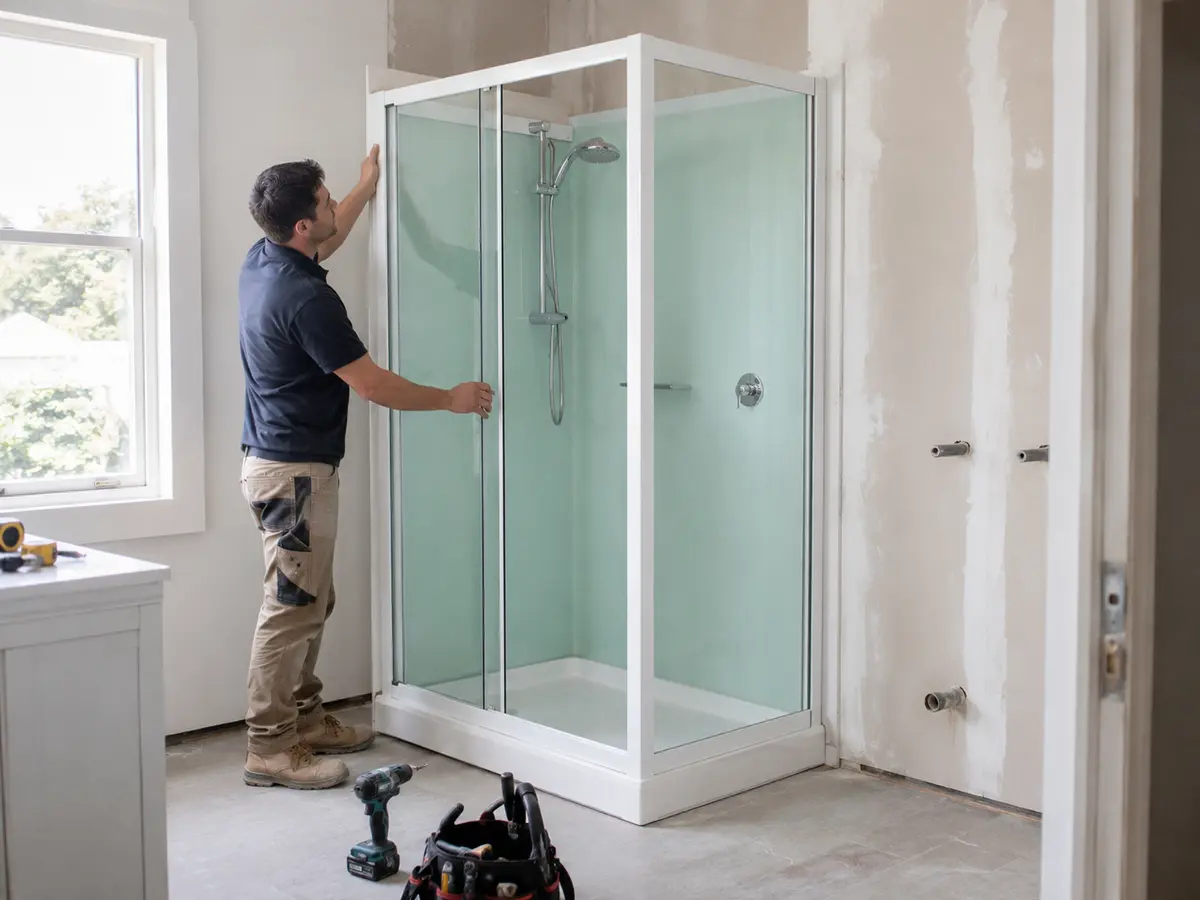
Aeros shower-pod assembly
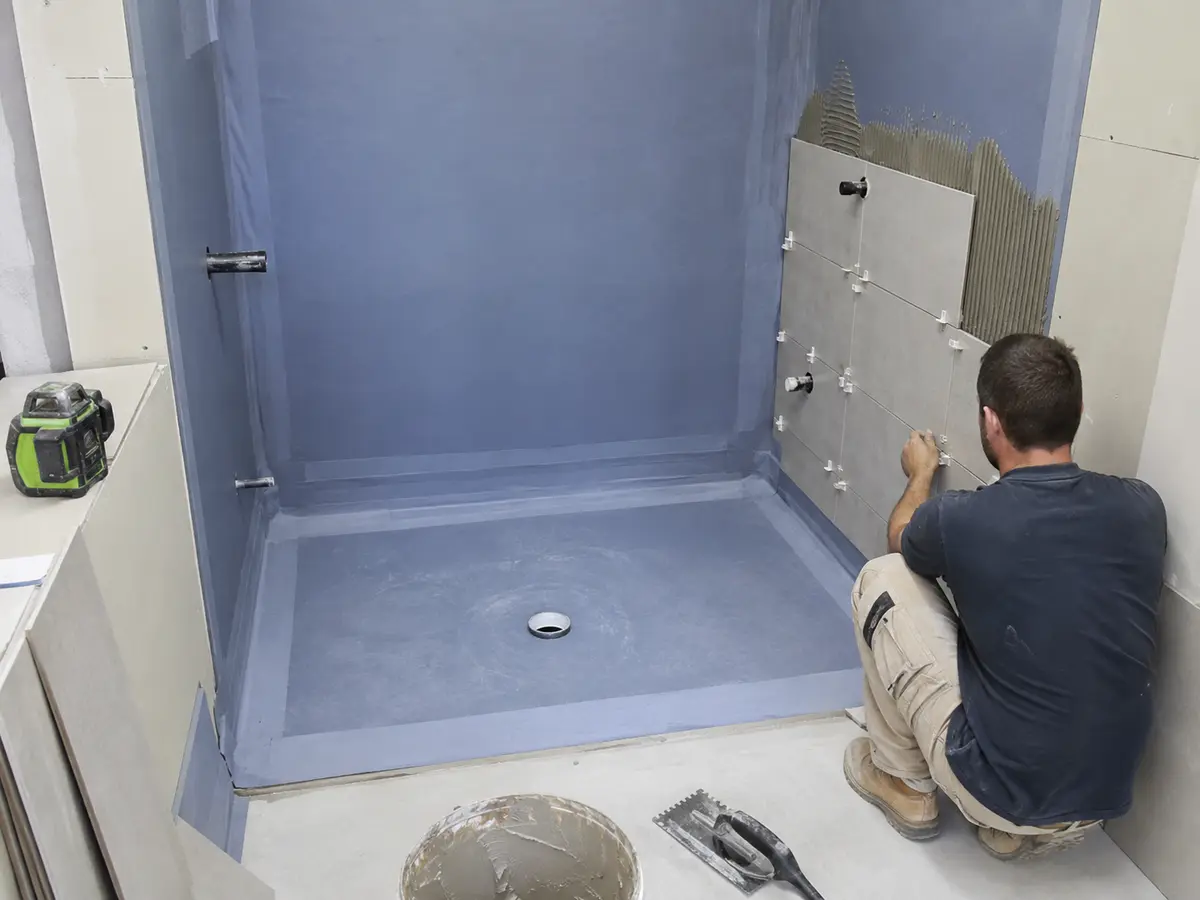
Traditional waterproofing method
The images illustrate why shower pods vs tiles should be compared as complete construction methods. A pod is an assembled product system. A tiled shower is a site-built wet area whose performance depends on each material, trade and junction being completed correctly.
Shower pods vs tiles: complete comparison
| Decision factor | Shower pods | Tiled showers |
|---|---|---|
| Construction | Coordinated tray, enclosure, glass and fittings | Separate substrate, membrane, tiles, screen and fittings |
| Installation time | Assembly can often be completed in one day after preparation | Multiple trade visits and curing stages are usually required |
| Watertight strategy | Water is contained within the enclosed cubicle and reinforced tray | Relies on the site-applied waterproofing system and detailed junctions |
| Cost certainty | More of the finished shower is included in a defined product | Final cost depends on materials, labour, site conditions and variations |
| Design choice | Established shapes, sizes and feature packages | Extensive freedom in tile, glass, dimensions, niches and hardware |
| Cleaning | Smooth panels and glass; no tiled shower-wall grout | Tile and grout require regular cleaning and inspection |
| Room preparation | Suitable level area, services, waste, ventilation and clearance | Prepared substrates, falls, waterproofing and finishing are required |
| Future removal | Potentially removable where access and services permit | Normally becomes a permanent building element |
| Accessibility | Raised tray requires an entry step | Can be designed with a flush or level-access floor |
No single column wins every category. The correct shower pods vs tiles decision depends on which factors matter most. Renovation speed and easy maintenance may outweigh unlimited design choice, while a custom architectural bathroom may justify the longer tiled construction programme.
Compare the completed shower, not isolated products
A pod price includes much more than a screen. A fair tiled-shower allowance includes the base or screed, waterproofing, wall finish, tiles, grout, screen, fittings, trade labour and project management. Comparing only a cubicle with a glass panel understates the tiled shower’s full scope.
Installation time, trades and disruption
An Aeros cubicle can often be assembled within one day when the room, water supplies and waste point are prepared. The installer positions and levels the reinforced tray, assembles the panels and frame, fits the glass and doors, connects the included shower components and tests operation.
A tiled shower normally follows a longer sequence. Demolition may expose damaged substrates that require repair. The floor and walls are prepared, falls are checked, waterproofing materials are applied, curing periods are observed, tiles and grout are completed, and the screen is measured or installed. Plumbing and electrical work must be coordinated with those stages.
For occupied homes, rentals, accommodation and secondary bathrooms, the difference in programme can be significant. The practical advantage of shower pods vs tiles is not merely faster assembly; it is fewer interdependent stages before the shower can be commissioned.
DIY assembly versus regulated work
A capable DIY renovator may assemble an Aeros cubicle by following the model-specific guide, protecting the glass and checking every component before starting. Plumbing connections and other regulated work must still be completed by appropriately licensed people where required.
Tiled showers demand specialist knowledge of substrates, falls, membranes, compatible materials and tile installation. A visible tile surface can look excellent while concealed waterproofing details are inadequate, which is why documented systems and qualified trades are important.
For an Aeros installation overview, read the fully enclosed shower installation guide and select the correct instructions from the assembly guides.
Cost and project certainty
Project cost includes products, labour, preparation, delays and future maintenance. A shower pod concentrates more of the finished shower into one purchase. Delivery, service preparation and licensed connections still need to be budgeted, but the scope is easier to define before installation.
A tiled shower budget is spread across more items and trades. Demolition, carpentry, sheeting, screeding, waterproofing, tiles, adhesives, grout, screen installation and plumbing can all appear separately. Unlevel floors, water damage or unsuitable walls may create variations after work begins.
| Cost stage | Pod approach | Tile approach |
|---|---|---|
| Shower walls | Enclosure panels included | Prepared substrate, membrane and tiled finish |
| Base | Reinforced tray and frame included | Tray or formed floor with falls and waste detailing |
| Screen | Glass and doors included with the model | Purchased or measured after surfaces are completed |
| Programme | Concentrated assembly and connection sequence | Sequential trade visits and curing allowances |
| Variation risk | More predictable after room and services are assessed | Greater exposure to concealed substrate and construction issues |
In a shower pods vs tiles cost analysis, pods can save through reduced building work, time and coordination. Tiles can deliver higher design value where custom finishes are the project’s primary objective. Obtain complete quotations and confirm exactly what each option includes.
Watertight construction and compliance
Aeros shower cubicles are designed as fully enclosed, watertight systems. The tray, panels, frame and glass work together to direct shower water into the waste. This separates the shower enclosure from the surrounding decorative room surfaces.
A tiled shower uses a concealed waterproofing system to protect the building beneath the visible finish. Correct preparation and detailing around corners, penetrations, wastes and screen fixings are essential. Tiles and grout alone do not create the waterproof barrier.
This difference is central to shower pods vs tiles. The pod’s water-management geometry is developed as part of the product; the tiled shower’s water management is created and verified on the individual site. Both still require correct installation, suitable drainage, ventilation and compliance with applicable requirements.
Australian product requirements
Aeros uses 5 mm safety glass certified to AS/NZS 2208 and WaterMark/WELS-compliant plumbing components where required. Buyers can verify registered water-efficient products through the Australian Government’s Water Rating website.
Product certification does not replace installation responsibilities. Check local approval requirements, use licensed trades for regulated work and retain relevant documentation. For tiled work, ensure the selected waterproofing system and installer are appropriate for the specific project.
Cleaning, grout and long-term maintenance
For shower pods vs tiles maintenance, pods use smooth acrylic panels, powder-coated aluminium and safety glass inside the shower. Routine cleaning does not involve tiled shower-wall grout. Suitable non-abrasive cleaners and regular rinsing help protect the surfaces and fittings.
Tiled showers need cleaning that suits the tile and grout products. Grout lines can collect soap residue and discolouration, while silicone joints require inspection and eventual renewal. Cracked grout or failed sealant should be investigated rather than treated as a purely cosmetic issue.
The maintenance advantage in shower pods vs tiles is therefore reduced grout and fewer site-built wet-area junctions inside the cubicle. Pods still contain service parts: door rollers, seals, hoses, shower heads and controls should be inspected, cleaned and replaced when necessary.
Repair and replacement parts
A coordinated cubicle does not mean replacing the entire shower when a service component wears. Aeros supplies compatible parts and accessories. Keeping the model information and order record helps identify the correct replacement.
A tiled shower may allow a mixer, screen or fitting to be replaced independently, but concealed membrane repairs can require tile removal. Matching older tiles and grout can also become difficult. Consider both everyday cleaning and potential concealed repairs when comparing ownership costs.
Design freedom, comfort and accessibility
Tiled showers provide the greatest design freedom. Large-format tiles, mosaics, niches, frameless glass, custom hardware and continuous floors can be combined around almost any feasible footprint. This is valuable when the shower must integrate seamlessly into a broader architectural concept.
Pods provide a controlled range of established configurations. Aeros offers square, round and rectangular models with different entry arrangements and sizes. The clean white frames, opaque aqua panels and clear glass create a neutral appearance that suits many bathrooms without requiring the surrounding walls to become part of the wet enclosure.
Comfort in shower pods vs tiles depends on usable space, not the label. Compare internal dimensions, door movement, entry width, control position, storage and circulation outside the shower. A round corner unit may improve movement in a compact room, while a rectangular unit may suit users wanting additional internal space.
Accessibility is a separate design decision
Aeros cubicles use a raised reinforced tray, so the user steps over the tray entry. Deluxe models include an internal grab bar, but that does not automatically make every model suitable for every accessibility need.
A tiled shower can be designed with level access, broader entries and project-specific support locations. Where wheelchair access, assisted bathing or a prescribed accessible layout is required, obtain professional advice and design around the individual user. The correct shower pods vs tiles answer may change when accessibility is the highest priority.
Best applications for each option
Renovations and second bathrooms
Pods are well suited to projects that need a complete shower without rebuilding every wall surface. They can make a laundry conversion, secondary bathroom or granny-flat upgrade more predictable when space and services are suitable.
Rental properties and accommodation
Fast installation, easy-clean surfaces and replaceable parts can reduce downtime and maintenance. In this application, shower pods vs tiles often favours the pod because programme and operational cost matter as much as appearance.
Builders and modular housing
Known dimensions and a repeatable assembly sequence help with service planning and production. Pods can suit modular homes, transportable buildings and multi-room projects where consistent installation is valuable.
Architectural homes and major bathroom rebuilds
Tiles are often stronger when the whole bathroom is being reconstructed and the design calls for a custom footprint, flush floor, continuous finishes or frameless glass. The additional trade stages can be justified by the tailored result.
Workshops, farms and staff amenities
Where a cost-efficient shower is required, an enclosed cubicle can provide a practical solution without an elaborate tiled fit-out. The room still needs suitable structure, water, waste, ventilation and any necessary approvals.
The broad lesson from shower pods vs tiles is to choose for the application. A product that is ideal for rapid rental renovation may not suit a bespoke accessible bathroom, and a custom tiled design may be unnecessary for a simple secondary shower.
Practical decision scenarios
Scenario 1: adding a second shower to an existing room
A homeowner wants to convert part of a laundry without removing serviceable wall finishes. The room has adequate ceiling height, a practical waste route and enough clear floor area for a defined cubicle. In this shower pods vs tiles scenario, the pod can limit demolition and keep the project focused on services, assembly and room ventilation.
Scenario 2: complete designer bathroom renovation
The entire bathroom is being stripped, the floor structure can be modified and the design includes continuous large-format tiles, a recessed niche and frameless glass. Here, shower pods vs tiles may favour tiles because the waterproofing and tiling trades are already required throughout the room and the bespoke finish is a central objective.
Scenario 3: rental property requiring a fast replacement
An existing shower has failed and the property cannot remain unavailable for a long construction programme. After the underlying room condition and services are assessed, a suitable Aeros cubicle can provide a defined replacement scope. The shower pods vs tiles comparison should include lost rent, trade scheduling and future cleaning, not only materials.
Scenario 4: modular or transportable housing
A builder needs repeatable dimensions, documented components and consistent assembly across several dwellings. A pod can be planned with the module’s service positions and installed through a controlled workflow. For this application, shower pods vs tiles often favours the repeatability of a complete enclosure, subject to transport and commissioning requirements.
Scenario 5: mobility-focused bathroom
The user needs a flush entry, generous circulation and specifically positioned supports. A raised-tray cubicle may not meet those individual requirements. In this case, shower pods vs tiles may favour a professionally designed level-access tiled shower. Accessibility should be assessed against the person, not assumed from general product features.
These examples show why the same product cannot be declared best for every project. The winning option is the one that satisfies the room, user, programme, maintenance plan and budget together.
Before committing, ask each supplier or contractor to state exclusions in writing. Confirm delivery access, preparation work, disposal, plumbing, electrical requirements, screen installation, curing time, warranties and final testing. A clear scope makes quotations easier to compare and reduces the risk that an apparently cheaper option becomes more expensive after work begins. It also gives owners a realistic date for returning the bathroom to service.
A final practical check is future service access. Confirm that hoses, controls, rollers, wastes and shut-off points can be inspected without damaging surrounding finishes. For a tiled shower, consider how concealed plumbing or membrane repairs would be reached and whether replacement tiles will remain available. For a pod, retain the model details, assembly guide and purchase information so compatible service parts can be identified. Good documentation supports either option and should be handed to future owners, tenants or maintenance contractors. It also helps distinguish routine component maintenance from building work, reducing uncertainty when a shower needs attention several years after installation.
How to choose: shower pods vs tiles
- Measure first. Record floor dimensions, ceiling height, access paths, obstacles and service locations.
- Define the user. Consider entry, movement, storage, support, cleaning and accessibility requirements.
- Set the programme. Decide how long the room can be unavailable and whether multiple trade visits are practical.
- Compare completed costs. Include preparation, waterproofing, tiles, screens, labour, delivery, plumbing and variations.
- Choose the design priority. Decide whether custom finishes or a coordinated enclosed system matters more.
- Assess maintenance. Compare grout and sealant care with the service parts and smooth surfaces of a pod.
- Confirm compliance. Check product certification, project approvals and licensed-work requirements.
If speed, cost control, simple cleaning and a complete watertight enclosure are priorities, shower pods vs tiles usually favours an Aeros cubicle. If custom dimensions, flush access and continuous tiled finishes lead the brief, a traditional shower is more likely to suit.
Compare Aeros shower cubicles
Review square, round and rectangular models, then match the published dimensions and features to your room plan.
View shower cubiclesContact AerosFrequently asked questions
Are shower pods better than tiles?
They are better when fast installation, predictable scope, easy cleaning and an enclosed watertight system are priorities. Tiles are better for bespoke dimensions, flush access and unlimited visual design.
Are shower pods cheaper than tiled showers?
They can reduce the total installed cost by limiting waterproofing, tiling, screen coordination and labour stages. Compare complete quotations rather than the pod price with the tile price alone.
How quickly can an Aeros shower pod be installed?
Assembly can often be completed in one day after the room, water supplies and waste connection are prepared. Access or service alterations may extend the overall project.
Do shower pods need waterproofed walls behind them?
The Aeros enclosure contains shower water within its tray, panels and glass. The surrounding room must still meet applicable building requirements and manage general bathroom moisture appropriately.
Do tiles make a shower waterproof?
No. Tiles are a finish. The waterproofing system beneath or behind them, together with correctly detailed junctions and penetrations, protects the building.
Are shower pods easier to clean?
They avoid tiled shower-wall grout and use smooth panels and glass, which generally simplifies routine cleaning. Fittings, seals and tracks still require care.
Can shower pods be used in rental properties?
Yes. Their predictable installation, easy-clean surfaces and replaceable service components can suit rentals and accommodation where downtime matters.
Can a tiled shower provide level access?
Yes, a tiled shower can be designed around a flush or level-access floor when the structure, drainage, waterproofing and applicable accessibility requirements permit.
What should I measure before choosing?
Measure floor width and depth, ceiling height, door and hallway access, surrounding fixtures, water points, waste route and the selected shower’s entry clearance.
What is the key difference in shower pods vs tiles?
The key difference is that a pod is a coordinated product assembled in the room, while a tiled shower is a wet area built and finished on site from multiple systems and trades.
Conclusion
The shower pods vs tiles question does not have one universal winner. Aeros cubicles are designed for customers who value a complete enclosure, fast assembly, cost certainty, Australian-compliant components and reduced grout maintenance. Tiled showers remain ideal for custom architectural finishes, unusual dimensions and level-access designs.
Measure the room, identify the user’s needs and compare every stage of the completed project. That approach turns shower pods vs tiles from a style debate into a practical decision about installation, performance, maintenance and long-term value.

